















Is Noise Really That Big a Deal?
Short answer: Yes.
Our brains may have learned to ignore this constant din, but our bodies haven’t. They are still listening, and they are perpetually on high alert. This is the invisible crisis of noise pollution—a threat that doesn’t just annoy us, but actively rewires our biology and drains our economies.
While we debate carbon taxes and plastic bans, the economic fallout from noise often goes uncalculated. However, the costs are staggering. The European Environment Agency estimates the social cost of noise pollution in Europe to be over €40 billion annually. This figure accounts for a cascade of direct and indirect consequences:
- Decreased Productivity and Innovation: In open-plan offices and work-from-home environments, background noise has been shown to reduce cognitive performance, increase errors, and stifle creativity. A distracting environment forces our brains to work harder to maintain focus, leading to faster burnout.
- Reduced Property Values: Would you pay a premium for a home with a constant symphony of traffic outside? Studies have consistently shown a direct correlation between ambient noise levels and property values, with some analyses suggesting a 0.5% to 1.5% drop in value for every decibel increase.
- Increased Healthcare Burden: The World Health Organization (WHO) has quantified the health impact of noise in a sobering metric: Disability-Adjusted Life Years (DALYs). Across Western Europe, it’s estimated that 1.6 million healthy years of life are lost annually due to traffic noise alone, from stress-induced heart disease, sleep disturbance, and tinnitus.
For more on this, the WHO’s report on the Burden of Disease from Environmental Noise provides a stark quantitative analysis.

The Noise Crisis in Indian Cities
Indian metros like Delhi, Mumbai, and Kolkata are among the world’s noisiest. According to the Central Pollution Control Board (CPCB), noise levels in silence zones—near hospitals, schools, and courts—often exceed permissible limits (50 dB daytime, 40 dB nighttime) by 10–20 dB. During festivals or events, levels can spike to 100 dB, comparable to a lawnmower.
Key sources of urban noise include:
- Traffic: India’s vehicle population grew from 55 million in 2001 to over 300 million in 2023, per Ministry of Road Transport data. Horns and congestion amplify the issue.
- Construction: The construction sector in India expanded by 8% annually from 2015 to 2025, driven by urban growth, according to IBEF reports.
- Community Noise: Loudspeakers, public events, and celebrations frequently breach noise regulations.
Listening Smarter with Acoem
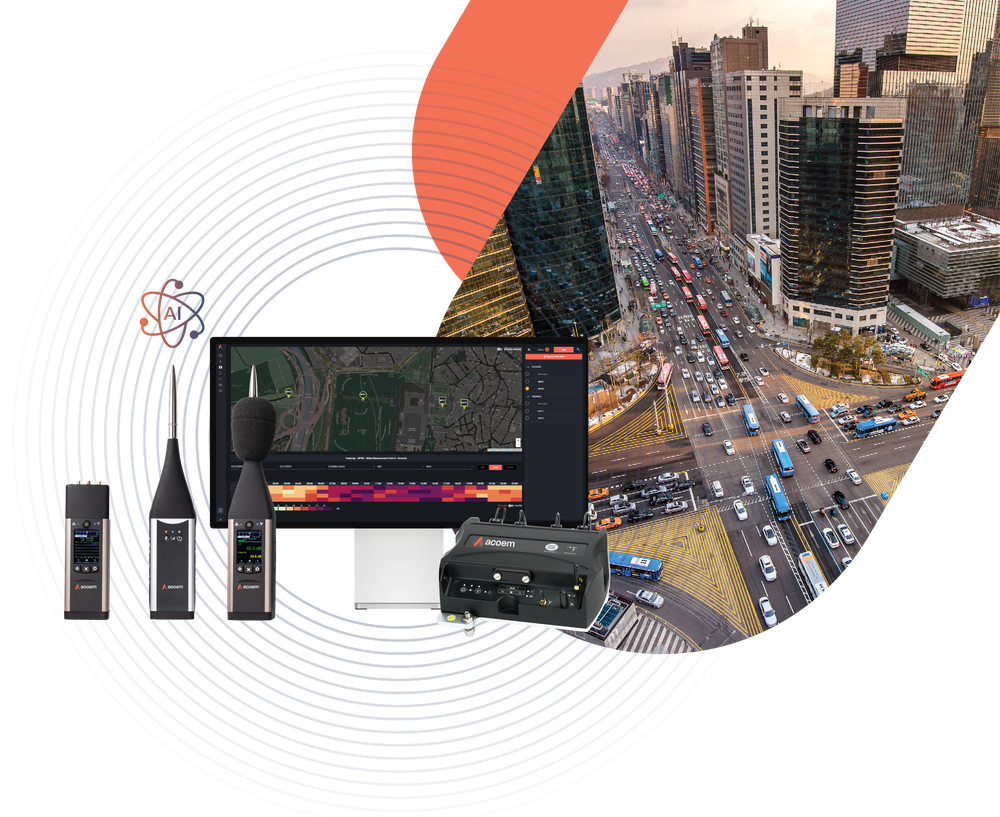
At Acoem, we help cities and industries tune into noise pollution with smart, real-time monitoring systems designed for real-world conditions — from busy highways to dusty construction zones and weather-exposed rooftops.
Our solutions are rugged, adaptable, and user-friendly, making it easy to deploy fixed or portable setups and focus on actionable data. We’ve installed advanced monitoring stations across India, enabling authorities to evaluate and respond to noise challenges efficiently.
A key part of our ecosystem is Cadence™ — a powerful, cloud-based platform that lets you manage and analyse noise data in real time, whether from a single sensor or an entire city-wide network.
rusted by pollution control boards, smart cities, airports, and industries, Acoem helps:
-
Ensure regulatory compliance
-
Improve community well-being
-
Support data-driven urban planning